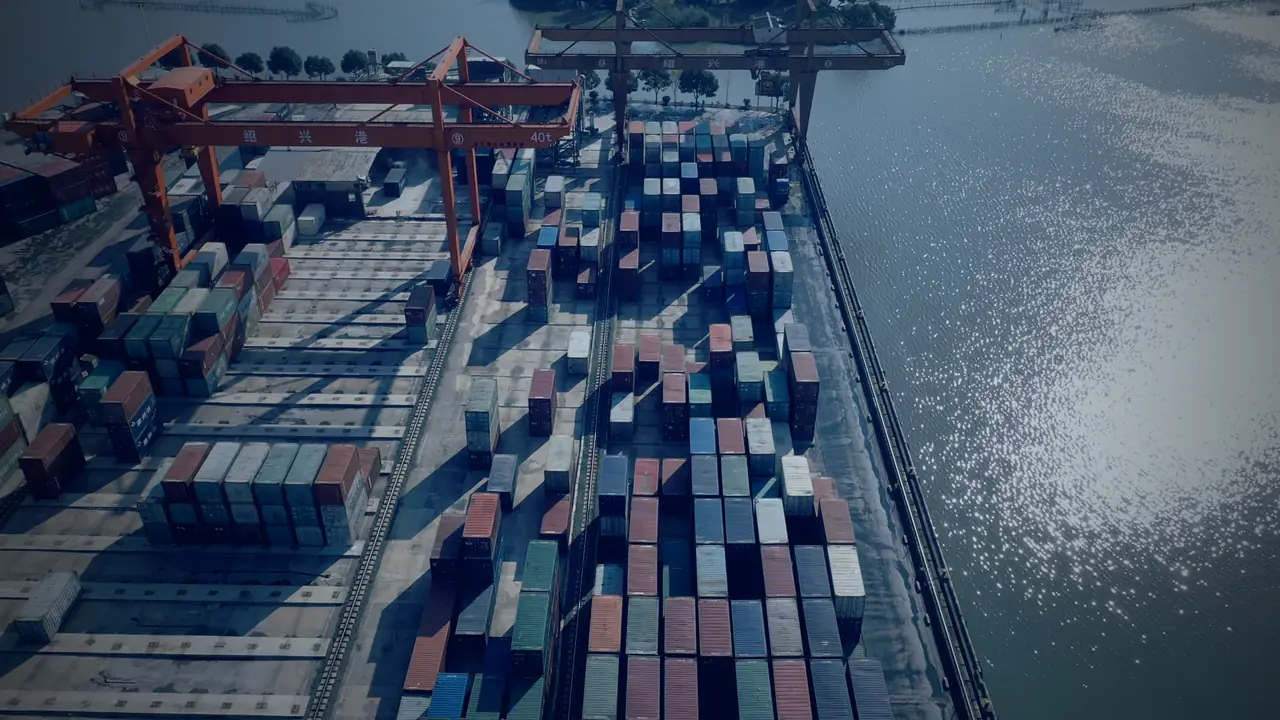
If you move volume, it will normally travel by sea, in a container. The first decision looks simple and isn’t always made well: do you fill a container or share one? It decides the price, the transit time and how many times someone handles your goods. We set it out for you in figures, move your cargo to and from any port and follow it until it’s unloaded. With the same care for one container as for a thousand.
FCL or LCL: two ways to go by sea
- FCL, full container load. The container is yours alone. It is packed at origin, sealed and not opened until destination, unless customs inspects it. You pay for the whole container, whether it travels full or half empty.
- LCL, groupage. Your cargo shares a container with other shippers’ cargo. You pay for the volume it takes up or for its weight, whichever is greater: in sea freight, one cubic metre counts as one tonne. The trade-off: your cargo is consolidated at a warehouse at origin and deconsolidated at another at destination, which adds handling and a few days.
There is no single figure that works for everyone. As your volume grows, there comes a point where a full container works out cheaper than paying by the cubic metre, and that point moves with the route and the market. That’s why we give you both prices. Sometimes FCL pays off even if you don’t fill it: if your goods are fragile or valuable, the fact that nobody touches them until destination counts too.
Which type of container you need
- Dry, 20 or 40 feet. The standard for almost everything. A 40-foot container has twice the space of a 20-foot one, but not twice the maximum payload, so heavy, dense cargo usually goes in a 20-footer.
- High cube. The same length as a 40-footer, with about 30 cm more internal height. Designed for bulky, light cargo: furniture, textiles, packaging.
- Reefer. For goods that need a controlled temperature for the whole journey. The refrigeration unit takes away some of the space and payload.
- Open top and flat rack. No roof or no sides, for cargo too tall or too wide for a standard container: machinery, coils, structures.
If yours doesn’t fit even on a flat rack, it’s a special project: we plan it separately, with its own route, permits and handling.
ETA monitoring: what we keep an eye on while it sails
The ETA is the vessel’s estimated time of arrival, and it moves more than you might think. A shipping line can skip a port call, a transhipment can miss its connection, a port can become congested or your container can be rolled to a later sailing because the vessel was full. None of that can be fixed from here, but it can be anticipated.
So we don’t wait for the ship to arrive before we look. We follow every change to the ETA and tell you as soon as it happens, along with what it means for you: rebooking the collection haulier, the slot at the warehouse or the date you gave your customer. You can also see it in My Lean, alongside the shipment documents.
There’s another reason to watch the arrival. Once the container is unloaded, the free time the shipping line allows for picking it up and returning it empty start running, and every extra day is charged. If the ETA moves and nobody reschedules the pick-up, that cost appears. To avoid it, we coordinate customs, haulage and unloading around the actual arrival date, not the one forecast at booking.
Two documents nothing is loaded without
- Verified gross mass (VGM). Since 1 July 2016, under the SOLAS convention, a packed container is not loaded without its verified gross mass. The shipper declares it, and there are two ways to obtain it: weighing the packed, sealed container, or adding up the goods, the packaging and the tare. If you export, we explain how to do it. If you import, we ask your supplier for it.
- Bill of lading (B/L). The shipping line issues it once the cargo is on board, and it gives the right to receive the cargo at the port of destination. Handing over the original is equivalent to handing over the goods, and the shipping line releases them to whoever presents that original. That’s why we check its details with you before it is issued.
If you import, add the entry summary declaration (ENS) that the European Union requires before loading at origin, followed by clearance at destination. Our customs team takes care of both.
When the ship isn’t enough
The ship is the logical choice for volume, but not the fastest. If part of the order can’t wait, it can go by air while the rest sails. And if you import from China, rail is the middle ground between the two.
Tell us what you move, from where to where and how much space it takes up. We’ll send you the FCL and the LCL price so you can compare.