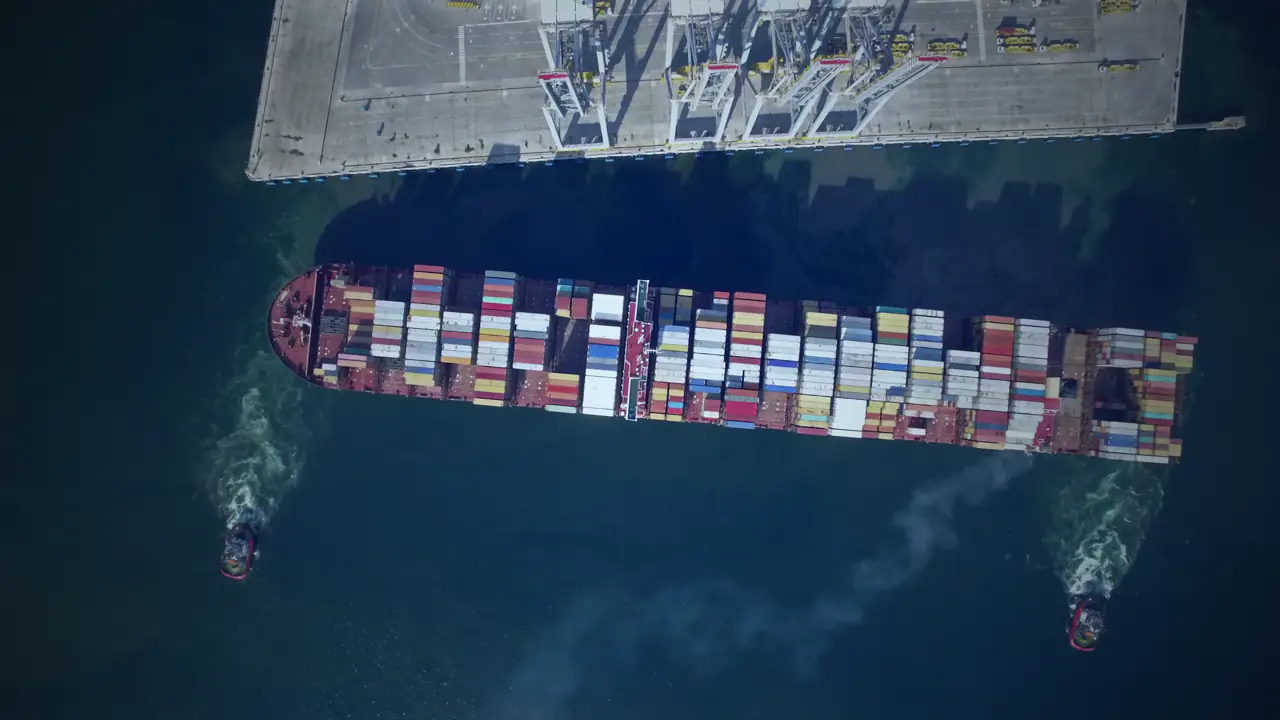
Cross-trade means moving goods between two countries that aren’t your own. Your company, in Spain, buys from a manufacturer in China and sells to a customer in the United States. The goods travel from China to the United States and never pass through here. Three parties, two invoices and one journey. It’s one of the services we focus on most, and we coordinate it from Spain with a network of more than 500 agents.
How a triangular shipment works, step by step
Say you buy from a manufacturer in China and sell to a distributor in the United States:
- You close both sales. The purchase from your supplier and the sale to your customer, each with its own Incoterm. The two have to fit together, and we check them with you before you sign.
- We book at origin. We work with our agent in China to arrange collection from the factory, export clearance and space on the ship or the plane.
- The declarations, before loading. If the destination is the United States, the carrier transmits the manifest through the AMS system and the importer, or its agent, files the ISF, in both cases 24 hours before loading. We make sure the data matches the invoice and the bill of lading.
- It travels direct. The goods go from China to the United States. At destination, the importer clears them with its customs broker and our agent there coordinates the delivery.
- You follow it from here. You can track every milestone in My Lean, with the documents to hand, even when the cargo is thousands of kilometres away.
You deal with one person in Spain, who coordinates the agent at origin, the carrier and the agent at destination, so you don’t have to chase anyone.
Who invoices whom
In a cross-trade there are two sales, so there are two invoices:
- Your supplier invoices you, with the Incoterm of your purchase.
- You invoice your customer, with the Incoterm of your sale.
- Transport is paid by whoever each Incoterm says. If you buy FOB and sell DAP, for example, the main freight and the risk during the journey are yours. If you book it with us, we invoice you at a fixed price.
On VAT: if the goods leave China and go to the United States without entering Spain, your sale isn’t considered to take place in Spanish territory. The Spanish VAT Act places supplies involving transport where that transport begins. Every transaction has its nuances, so check with your tax adviser.
Documents: what each party sees
In a triangular shipment, the paperwork has to tell the same story at both ends without showing more than it should:
- Commercial invoice and packing list for customs at destination. Your customer imports with the invoice you issue.
- Bill of lading. Who appears as shipper and who as consignee is decided at booking. If you don’t want your customer to see your supplier, it has to be planned from the start, not halfway through the journey.
- Certificate of origin, if the destination country requires one.
- ISF data: seller, buyer, manufacturer or supplier, country of origin and 6-digit tariff code. Note that even if your customer doesn’t see your supplier, US customs does.
Origin doesn’t change because you invoice from Spain
An invoice from a Spanish company doesn’t make the goods Spanish. For US customs, the origin is the country where they were made, and it only changes if there is a substantial transformation in another country. A product made in China is still Chinese, with the duties the United States applies to that origin, including the additional Section 301 duties on the products affected.
That’s why we work out the cost at destination before you agree a price with your customer. How we handle the safety and security declarations is explained in customs clearance.
EU sanctions travel with you
Even if the goods never touch European soil, your company is European. European Union sanctions bind companies incorporated in a Member State and EU nationals, wherever they are. A triangular shipment between two third countries isn’t outside their reach.
Before closing a deal, check that neither the product, nor the destination, nor the parties are subject to sanctions. We help you do it and, if something doesn’t fit, we tell you before booking, not with the cargo already at sea.
Beyond China and the United States
China–United States is the clearest example, but the logic is the same between any pair of countries: what changes are the documents and the rules at destination. If you want to see everything we can take on for you, from advice before you buy to final delivery, start with import and export services.
Have you got a supplier in one country and a customer in another? Tell us what you move, from where to where and on which Incoterms, and we’ll send you a firm proposal.