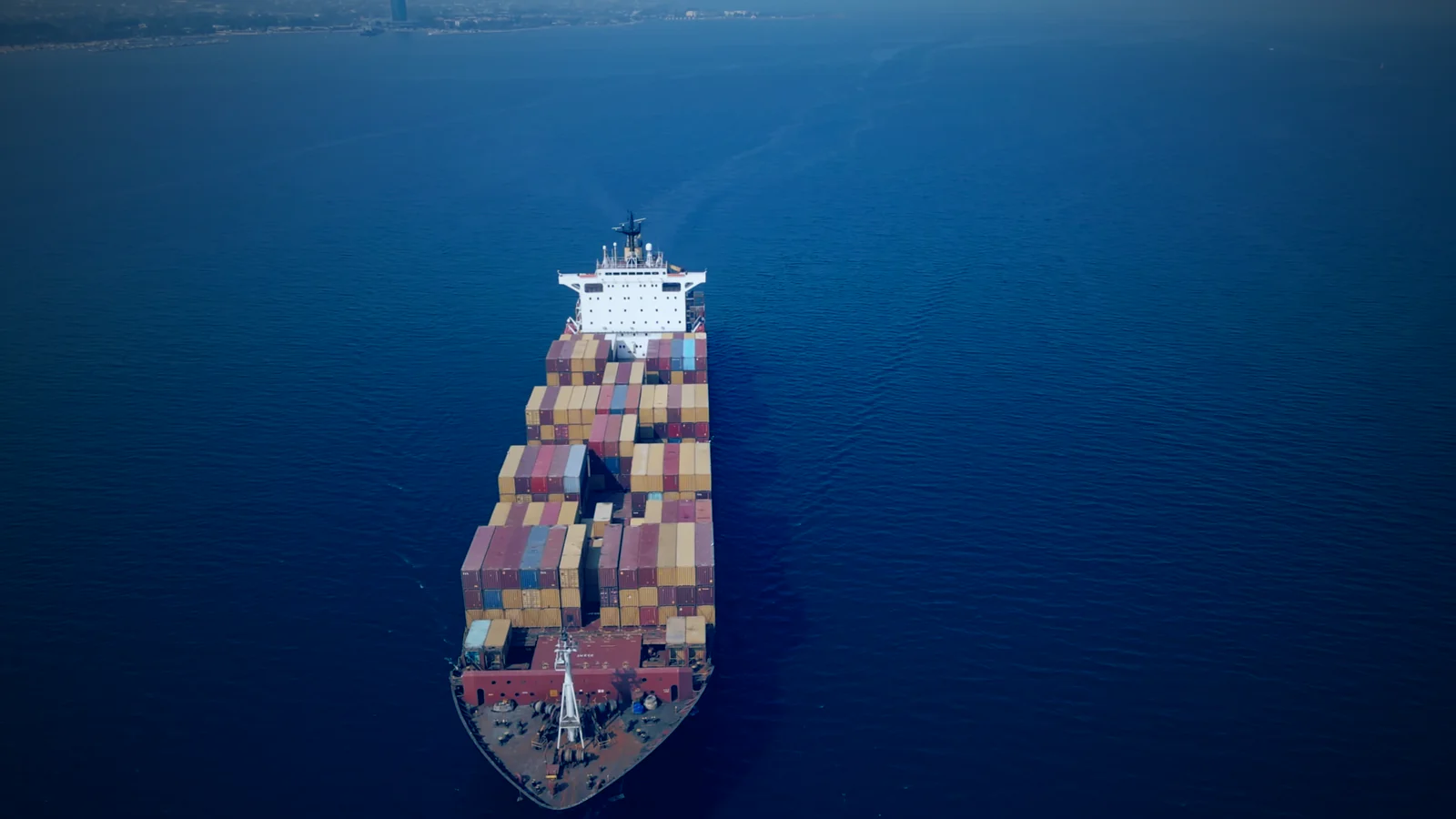
An international trade operation has many moving parts: the supplier or customer, collection, transport, two customs clearances, sometimes a warehouse and the final delivery. You can buy each part separately and coordinate them yourself, or hand the whole operation to a single team. We do the latter.
Before going any further, one thing should be clear: we don’t buy or sell your goods. The sale is yours. We make sure the goods reach their destination, with the paperwork in order and the cost clear from day one.
What’s included when you hand us everything
These are the legs we take care of from end to end. You can hand us all of them or just the ones you need.
- Before you buy or sell. We advise you on the product requirements at destination (the FDA in the United States or CCC certification in China, for example), certificates of origin and letters of credit. If you need it, we help you find suppliers or distributors there.
- Collection at origin. At your supplier’s factory or at your warehouse, with the cargo ready to travel.
- Export clearance. The export declaration and whatever the country the goods leave from requires.
- Main transport. By sea, air or rail, or combining modes.
- Import clearance. Classification, duties worked out in advance and clearance.
- Warehousing, if the goods don’t go straight to their destination: stock and traceability in real time.
- Final delivery. To your door or your customer’s. In mainland Spain, by road or by rail.
You follow the whole journey in My Lean, with the documents and customs milestones on your phone. And if the goods go from one country to another without touching Spain, we handle that too: it’s cross-trade.
The Incoterm decides which part is yours
How many of those legs you have to organise isn’t decided by the forwarder, but by the Incoterm you agree with your supplier or customer. These are six of the eleven that exist, seen from the buyer’s side:
| Incoterm | How far the seller goes | What you have to organise |
|---|---|---|
| EXW | Makes the goods available to you at its premises, not loaded and not cleared for export. | Everything: loading, departure, transport, arrival and delivery. |
| FCA | Hands them over to the carrier you nominate. The risk passes to you at that point. | The main transport, arrival and delivery. |
| FOB | Loads them on board the ship you nominate, at the port of departure. That’s where the risk passes. | The sea freight, arrival, clearance and delivery. |
| CIF | Pays the freight and minimum-cover insurance to the port of destination, but the risk passes to you on loading at origin. | Arrival, clearance and delivery. |
| DAP | Takes the goods to the agreed place and bears the risk until they get there. | Unloading, import clearance and the payments it involves. |
| DDP | The same as DAP, but with the import cleared and the duties paid. | Receiving them. |
If you sell, read the table the other way round. With DAP or DDP you offer a price with delivery included, but with DDP you pay the duties at destination, so it’s worth knowing how much they are before you quote. We work them out for you with your product’s tariff code.
If you import and export: inward processing
If your company does both, buying components or raw materials abroad, processing them here and selling the finished product outside the European Union, there is a customs procedure designed for you: inward processing.
It works like this: you bring the goods in from outside the EU, process them here without paying import duties on them, and the procedure is discharged when the finished product leaves the Union. Two things are needed: prior authorisation from customs and, as a general rule, that the imported goods can be identified in the final product.
When the same team handles your imports and your exports, this procedure is easier to keep under control, because the data on what comes in and what goes out is in one place. Before you apply for the authorisation, we check with you whether your operations qualify.
Three mistakes that make an operation more expensive
All three are avoided before you sign:
- Agreeing the price without the landed cost. The factory price isn’t what the goods cost you in your warehouse. On top of it come the freight, the charges at destination, the duty and the import VAT. Ask us for the full calculation before you commit.
- Choosing the Incoterm out of habit. Buying EXW looks like the cheapest option, but it means you have to organise the departure in your supplier’s country, including its export customs. If you have nobody there, another Incoterm may work out better.
- Documents that don’t match each other. If the invoice, the packing list and the transport document show different weights, numbers of packages or descriptions, customs asks questions, and meanwhile the goods wait. We check them together before the cargo leaves.