To move goods from one country to another we offer you three modes: sea, air and, from China, rail. Each has its own price, transit time, footprint and paperwork, and rarely does one cover the whole journey: the first and last legs go overland. In mainland Spain, we handle that collection and delivery by road or by rail. On this page we compare the modes so that you know what suits you before you ask for a price.
The modes, side by side
| Mode | Suits you when | Transit time | Transport document |
|---|---|---|---|
| Sea | You move volume or weight, in a full (FCL) or shared (LCL) container, and can plan with time to spare | Depends on the route and the shipping line: we give you the exact figure with the quote | Bill of lading (B/L) |
| Air | You’re in a hurry, or your cargo is worth a lot and weighs little | 24–48 h for an urgent shipment | Air waybill (AWB) |
| Rail | You import from China and the ship is too slow and air too expensive | 30–35 days door to door | Rail consignment note (CIM/SMGS between Asia and Europe) |
| Road | You collect or deliver in mainland Spain, at the start or end of the sea, air or rail leg | We give it to you with the quote | Spanish road control document |
Each mode has its own page, with everything you need to know in depth: sea, air and China–Spain rail.
The documents in the last column aren’t just another formality. The bill of lading and the air and rail consignment notes are evidence of the contract with whoever carries your cargo. On the road, within Spain, the control document goes with every shipment and states who contracts and who carries, the origin, the destination and the goods. On the railway between Asia and Europe two legal regimes coexist, CIM and SMGS, and the common CIM/SMGS consignment note avoids reissuing the document at the point where one gives way to the other.
A detail for the contract with your supplier or customer: FOB and CIF are Incoterms only for transport by sea or inland waterway. If the cargo goes by air or rail, the ones that fit are those designed for any mode, such as FCA, CPT, CIP or DAP. Check it before you sign: a sea Incoterm on an air shipment leaves it unclear where the risk passes.
Four questions to help you choose
Before you think about the mode, think about your cargo:
- When do you need it? If the date is fixed and close, start with air. If you have weeks, look at sea and, from China, at rail too.
- How much space does it take up and how much does it weigh? A single pallet and twenty containers don’t move the same way or cost the same. The volume will tell you whether to go groupage or in your own container.
- How much is each kilo worth? The more your goods are worth, the less the freight shows in their final price and the sooner a fast mode pays off.
- What does it cost you if it arrives late? A production line at a standstill or a missed season can cost more than the difference between two freight rates.
With those four answers we propose a mode, or a combination of several, and put it in writing with the costs fixed.
The footprint of each mode, in numbers
The mode also determines the shipment’s emissions. Using the default values of the GLEC Framework, Smart Freight Centre’s framework for measuring logistics emissions, aligned with the ISO 14083 standard, moving one tonne one kilometre emits approximately:
- by long-haul air, 788 g of CO2e;
- by articulated lorry in Europe, 101 g;
- by container ship between Asia and the Mediterranean, about 5 g, counting the average load of 10 tonnes per 20-foot container that GLEC uses when the real weight isn’t known.
In other words: per tonne-kilometre, air emits about 150 times as much as sea on that route. For rail between China and Europe, GLEC doesn’t publish a value of its own. Work out the CO2 of your shipment, with your route and weight, in our carbon footprint calculator.
If your cargo is dangerous or out of gauge
Batteries, paints, aerosols or chemicals can travel, but each mode has its own dangerous goods regulations:
- Sea: the IMDG Code, mandatory since 2004 under the SOLAS convention.
- Air: the ICAO Technical Instructions and the IATA regulations, which are what the airlines apply.
- Road: ADR, the European agreement that also applies in Spain, alongside its own national rules.
- Rail: RID, which forms part of the international convention on rail transport (COTIF).
The rules aren’t the same, so what is fine by sea isn’t always fine by air. Tell us what you’re shipping before we quote and we’ll choose the mode with that in mind.
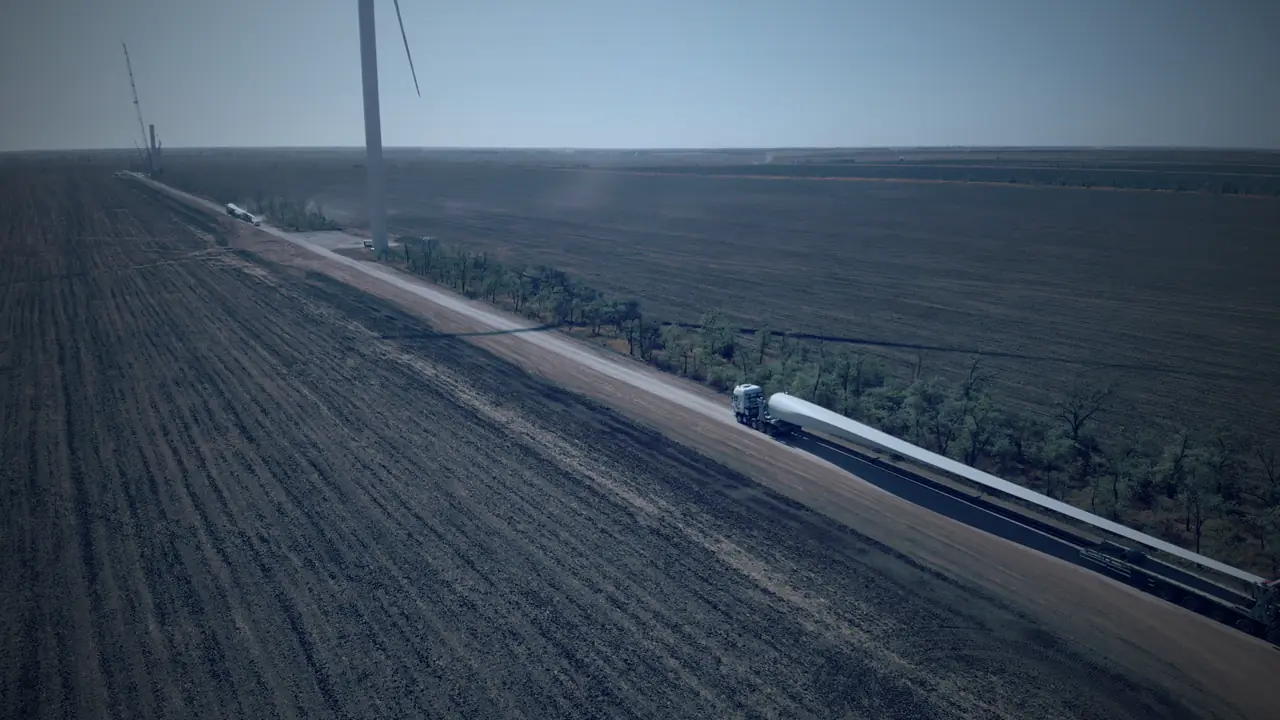
And if your cargo won’t fit in any container, it can still be moved: wind turbines, 40-metre loads or 120-tonne pieces, with the route, permits and handling planned in detail. You’ll find it under special projects.